

USD 50 Free Play!
Any League, Any Team, Any Player...Any Time
No Deposit Required*



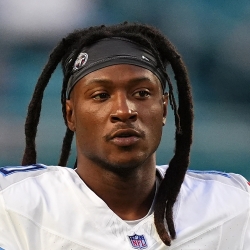
Houston Texans wide receiver DeAndre Hopkins was a standout two-way athlete in high school, which made him an appealing recruit for college coaches across the country. Ultimately, he decided that Clemson was the best fit for him, and the time with the Tigers certainly helped prepare him for the next level.
Although the Tigers did not really throw the ball all that much, Hopkins was able to establish himself as the team’s No. 1 wide receiver his freshman year. In his first four games of the season, he was not much of a factor. Against Florida State, however, he was able to have a breakout game by recording eight catches for 106 yards. Two weeks later, he made seven catches for 124 yards and a touchdown against South Carolina. After a respectable freshman year (51 receptions, 626 yards and four touchdowns), he had an even better sophomore campaign. He recorded three 100-yard performances and finished with 72 catches for 978 yards on the year. The emergence of Tajh Boyd helped his case as the team ended up throwing more often.
As expected, Hopkins put up a monster junior year before deciding to forego his senior campaign. On five occasions, he had over 100 receiving yards and arguably his top performance of his career came in his final game. In his team’s 25-24 Chick-Fil-A Bowl win, he recorded 13 catches for 191 yards and a pair of touchdowns. He finished the year with over 1,400 receiving yards on an 11-2 ACC team. That made him an appealing draft prospect, and the Houston Texans selected him in the first round of the 2013 NFL Draft as a result of the success he enjoyed at Clemson.
The 2013 Texans were a miserable squad (2-14 finish), but they threw a lot (633 attempts) and Hopkins was their No. 2 receiver behind Andre Johnson. Sure, he only got about half the amount of targets as Johnson, who had 181, but Hopkins did get the ball thrown to him 81 times. He capitalized on those with 52 receptions for 802 yards (15.4 yards per catch) and a pair of touchdown grabs.
In 2014, the Texans threw much less (485 attempts), but they were a much better team and Hopkins ended up being their top receiver. He was targeted 127 times and used his speed to excel; he had 76 catches for 1,210 yards for six touchdowns. He outperformed Johnson despite being targeted 19 less times. That success Hopkins enjoyed allowed him to establish himself as the team’s dominant receiver by the end of the season.
With Johnson gone in 2015, Hopkins really had a chance to shine—and he capitalized. His 191 targets made him one of the most depended upon receivers in league history. As a result, he made 111 catches for 1,521 yards and 11 touchdowns. On six occasions that season, he exceeded 100 receiving yards as he earned an All-Pro selection.
Once again, Hopkins was the go-to guy in 2016. The issue, however, was Brock Osweiler under center. His struggles caused a major passing issue for the Texans. As a result, Hopkins was held under 1,000 receiving yards and had just four touchdown grabs.
The 2017 campaign should be a step back in the right direction for Hopkins, though, since first-round pick Deshaun Watson shows promise under center. There’s not really sincere competition for touches through the air, so only an increased run game could potentially hurt Hopkins’ potential targets.




We are sorry, but you seem to be logged in from – We currently don’t allow play from .
Sincerely,
Dober Games Management
We are sorry, but you seem to be using a VPN, Proxy, VM, or other method used to hide or obfuscate your original IP address. Regulation requires users log in to our system with an IP address assigned by an ISP or telecom corporation.
Sincerely,
Dober Games Management


